


DIGITAL MODELING OF THE MUSEO NACIONAL CENTRO DE ARTE REINA SOFIA (MNCARS) BUILDINGS IN MADRID
Year: 2024-2026 | Promoters: SEGIPSA / MUSEO REINA SOFIA DE MADRID
Firms: BIM6D
PROJECT OVERVIEW
INTRODUCTION
The Museo Nacional Centro de Arte Reina Sofía (MNCARS) is one of the most important museums of modern and contemporary art in the world and one of the key cultural institutions in Spain. Its architectural complex combines historic and contemporary buildings located in Madrid and in the Retiro Park.
The museum headquarters include the historic Sabatini building, originally built in the 18th century as the General Hospital of Madrid, and the Nouvel extension, designed by architect Jean Nouvel and inaugurated in 2005. In addition, the museum manages two unique exhibition spaces located in the Retiro Park: the Palacio de Cristal and the Palacio de Velázquez.
Together, these buildings represent more than 87,000 m² of cultural infrastructure, hosting permanent collections, temporary exhibitions, research spaces, auditoriums, public areas and cultural activities.
BIM6D was commissioned to develop the digital modeling of the main buildings of the Museo Reina Sofía using BIM methodology, within the framework of the Spanish Recovery, Transformation and Resilience Plan funded by the European Union – Next Generation EU.
The project included the digital capture of the buildings through advanced 3D laser scanning technologies, the creation of BIM models at LOD 300, and the implementation of a Common Data Environment (CDE) for collaborative information management aligned with ISO 19650 standards.
The resulting BIM models provide an accurate and structured digital representation of the museum buildings, enabling improved asset management, maintenance planning and future digital innovation initiatives.
TOWARDS OPERATIONAL DIGITALTWINS
The creation of these BIM models represents a key step in the digital transformation of the museum’s infrastructure.
The long-term goal of this initiative is to enable the development of operational Digital Twins of the museum buildings, capable of integrating real-time information for asset management, maintenance and operational optimization.
As a natural evolution of this BIM digitalization process, BIM6D is currently working on the development of the Digital Twin of the Velázquez Palace, expanding the capabilities of the models towards real-time operational intelligence.
BUILDINGS MODELED
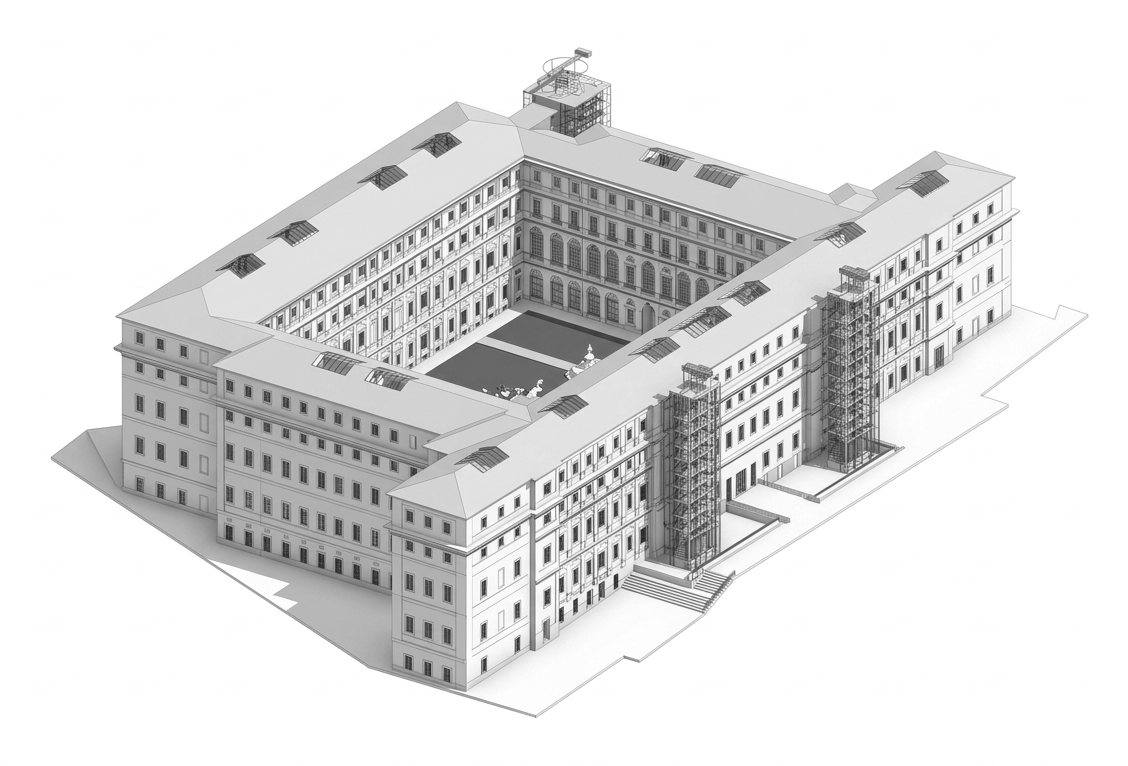
Sabatini Building
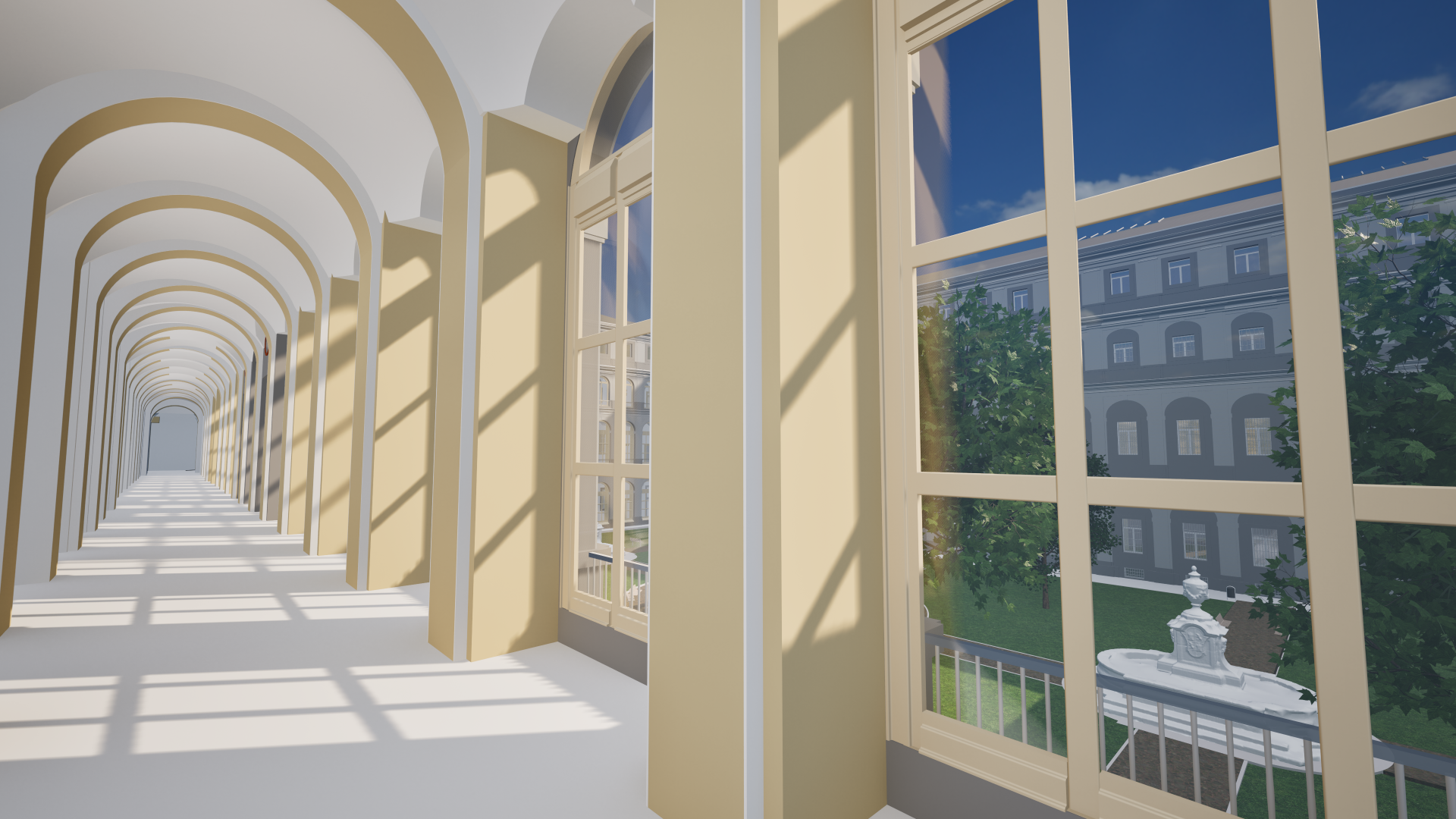
Historic neoclassical building originally constructed in the 18th century as the General Hospital of Madrid, designed by architect Francisco Sabatini. Today it forms the core of the Reina Sofía museum and hosts a large part of its permanent art collection.
Approx. area: 51,300 m²
Main uses: permanent exhibitions, cultural spaces and museum services.
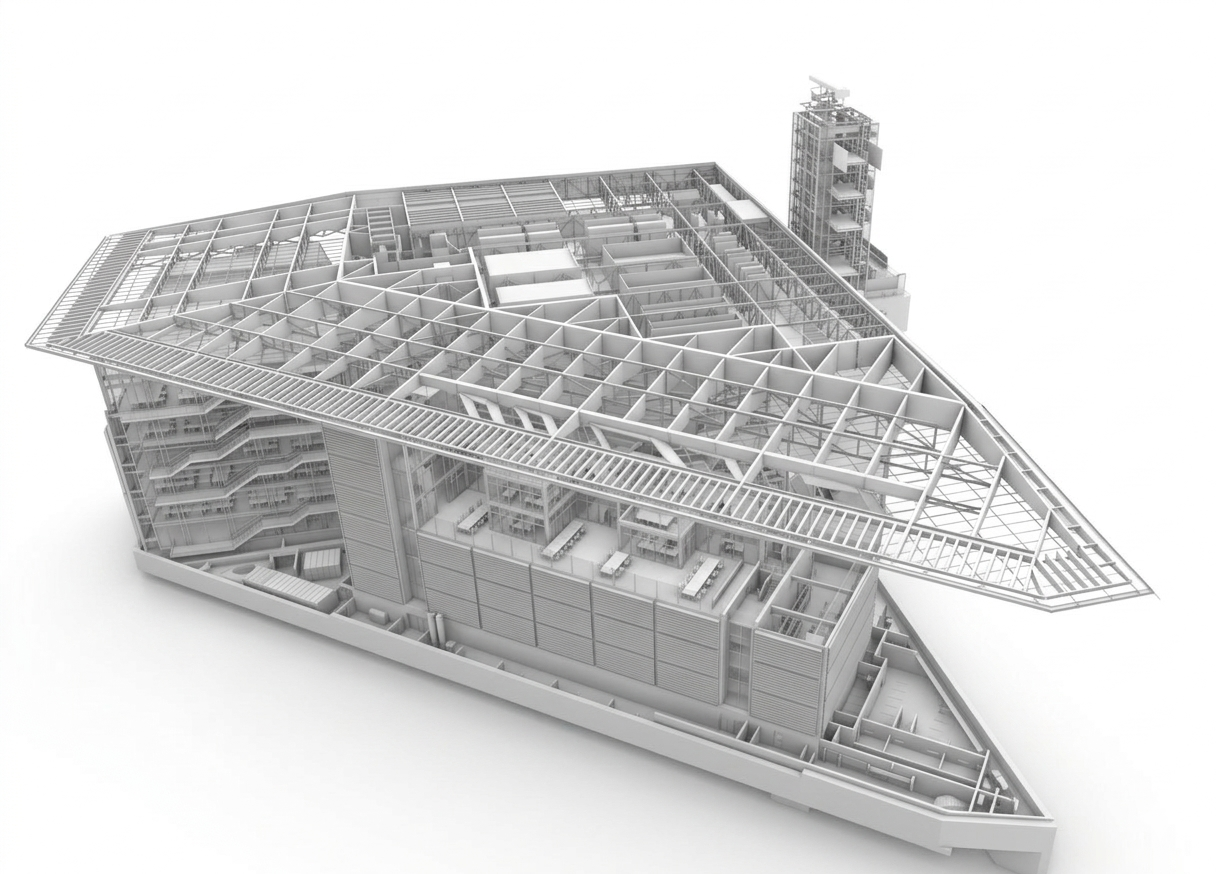
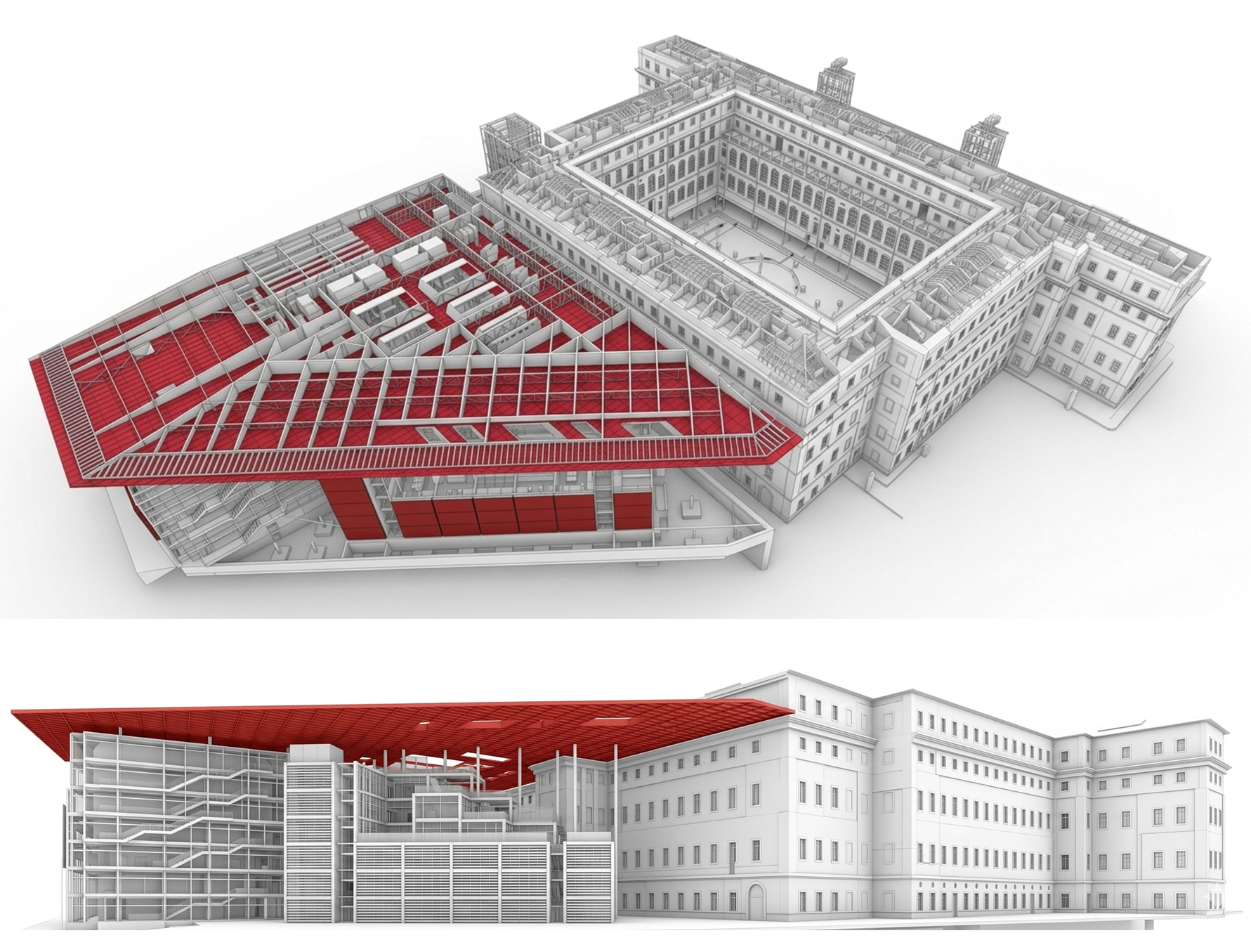
Nouvel Building
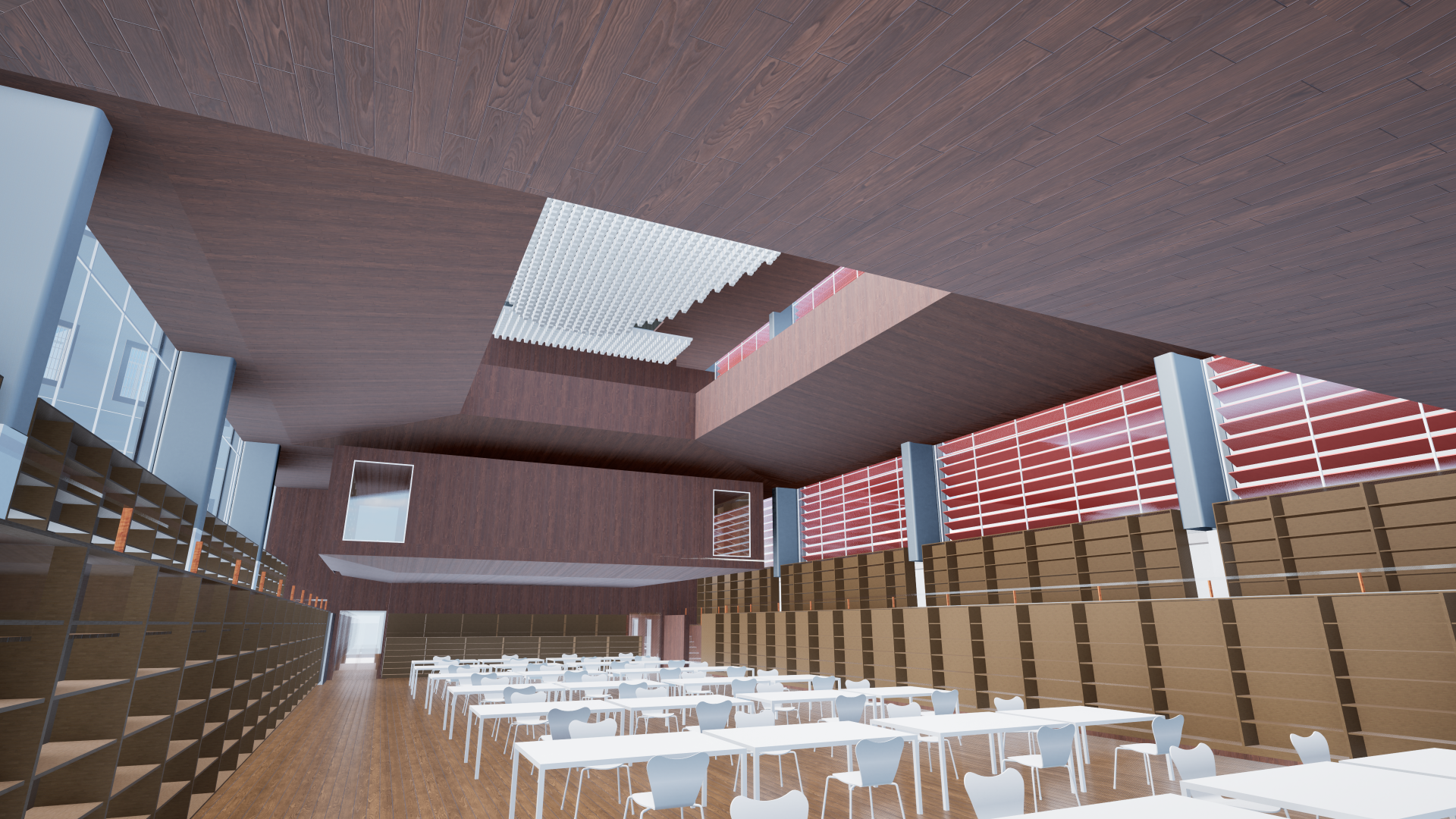
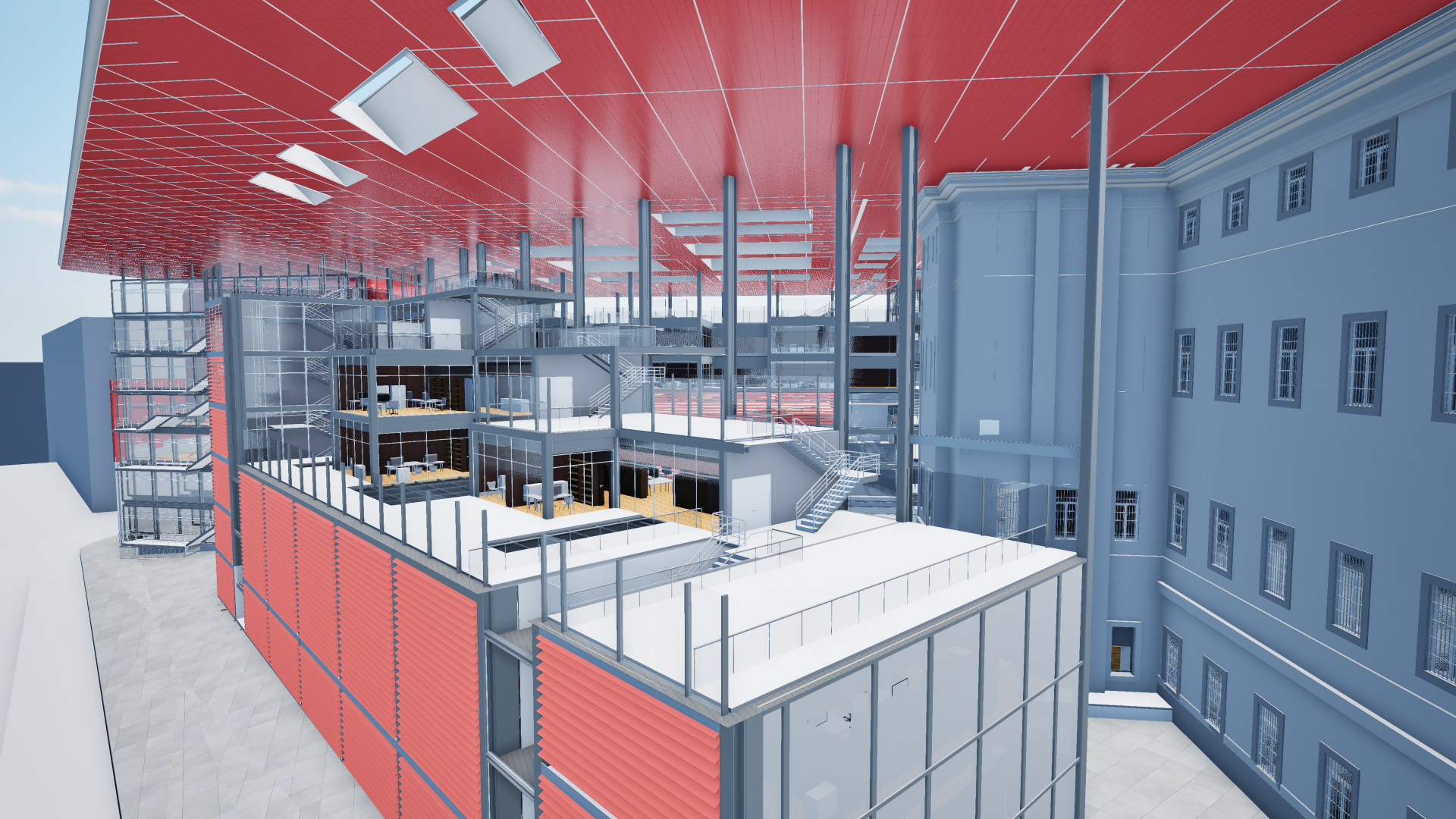
Contemporary extension designed by Jean Nouvel and inaugurated in 2005. The building complements the historic complex with modern exhibition halls and cultural facilities.
Approx. area: 32,000 m²
Main uses: temporary exhibitions, library, auditoriums, public spaces and administrative areas.
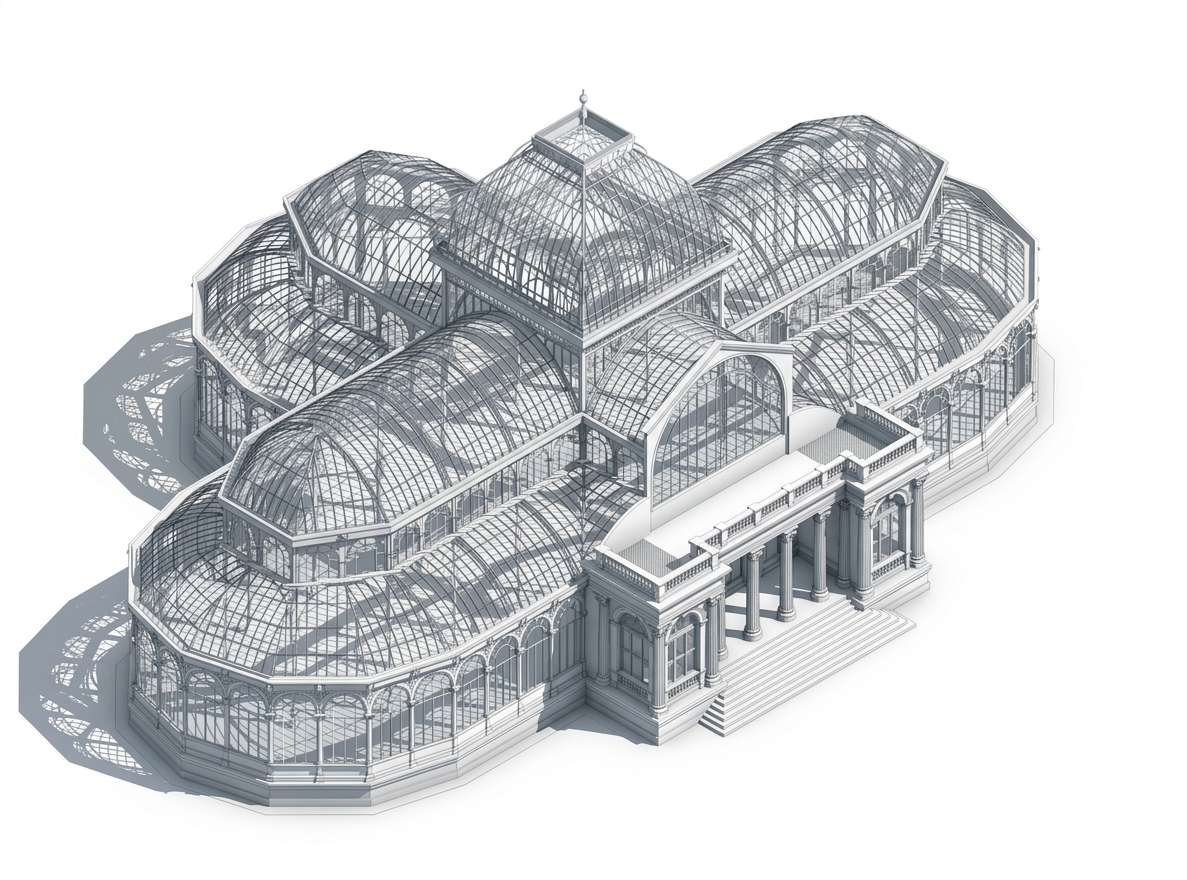
Palacio de Cristal
Iconic glass and iron structure located in Retiro Park, built in 1887 for the Philippine Exposition. Its transparent architecture provides a unique environment for contemporary art installations.
Approx. area: 2,000 m²
Main use: temporary exhibitions and artistic installations.
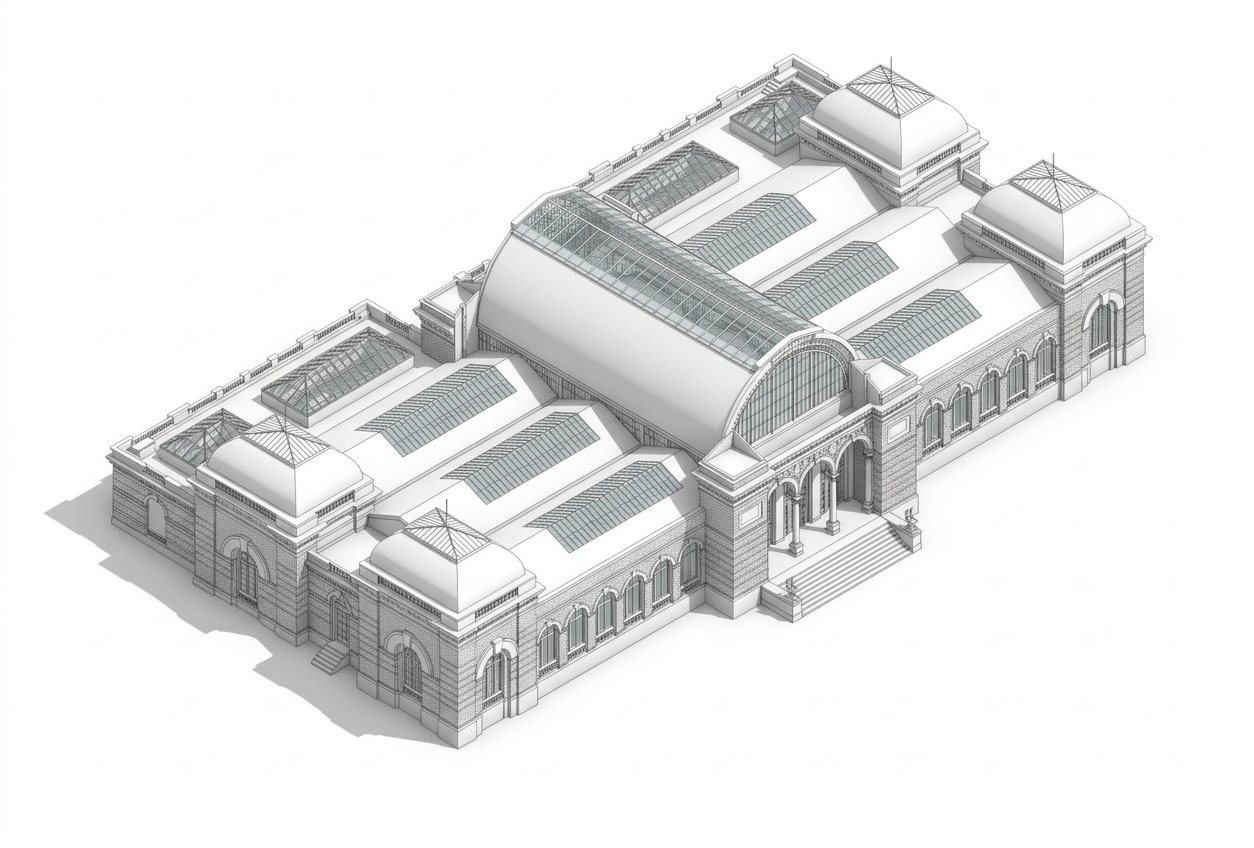
Palacio Velazquez
Historic exhibition building constructed between 1881 and 1883 by architect Ricardo Velázquez Bosco, also located in Retiro Park.
Approx. area: 2,000 m²
Main use: large-scale exhibitions and cultural events organized by the museum.
Project Workflow
1. Reality Capture – 3D Laser Scanning
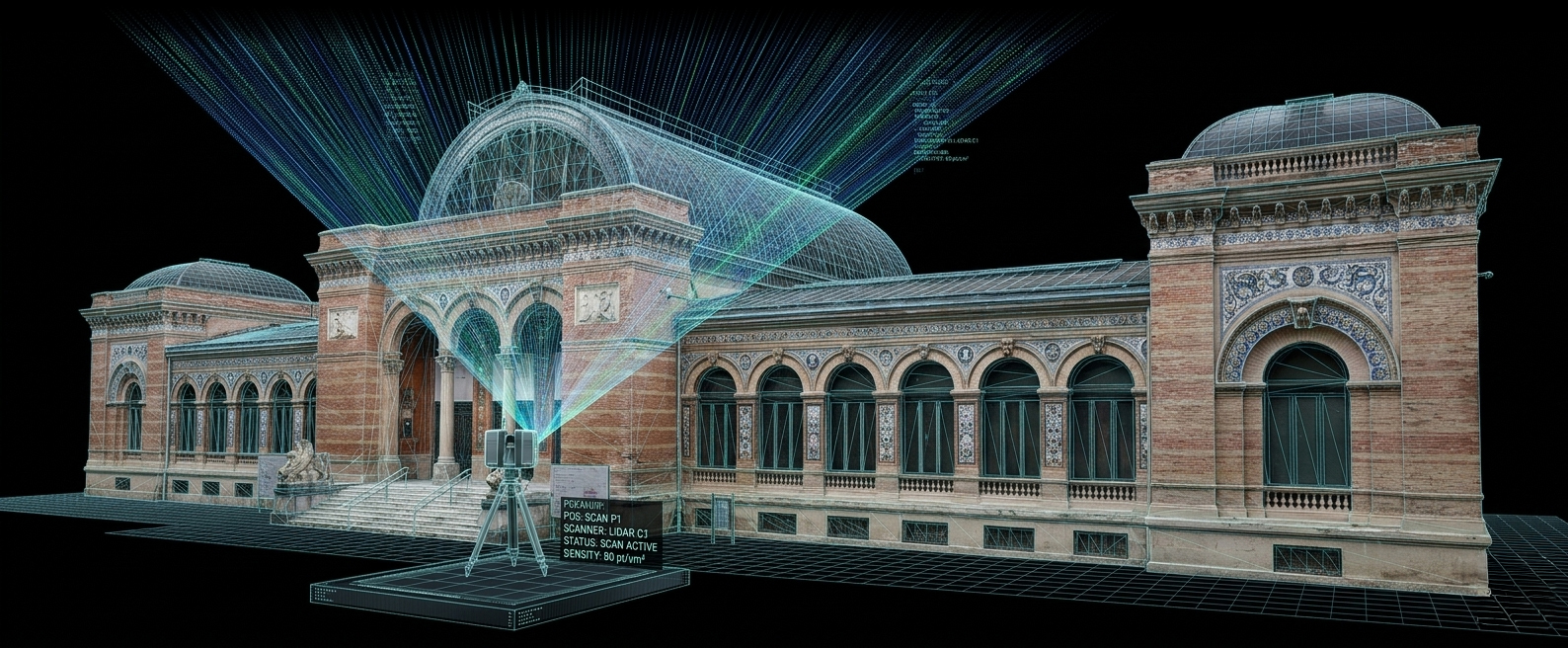
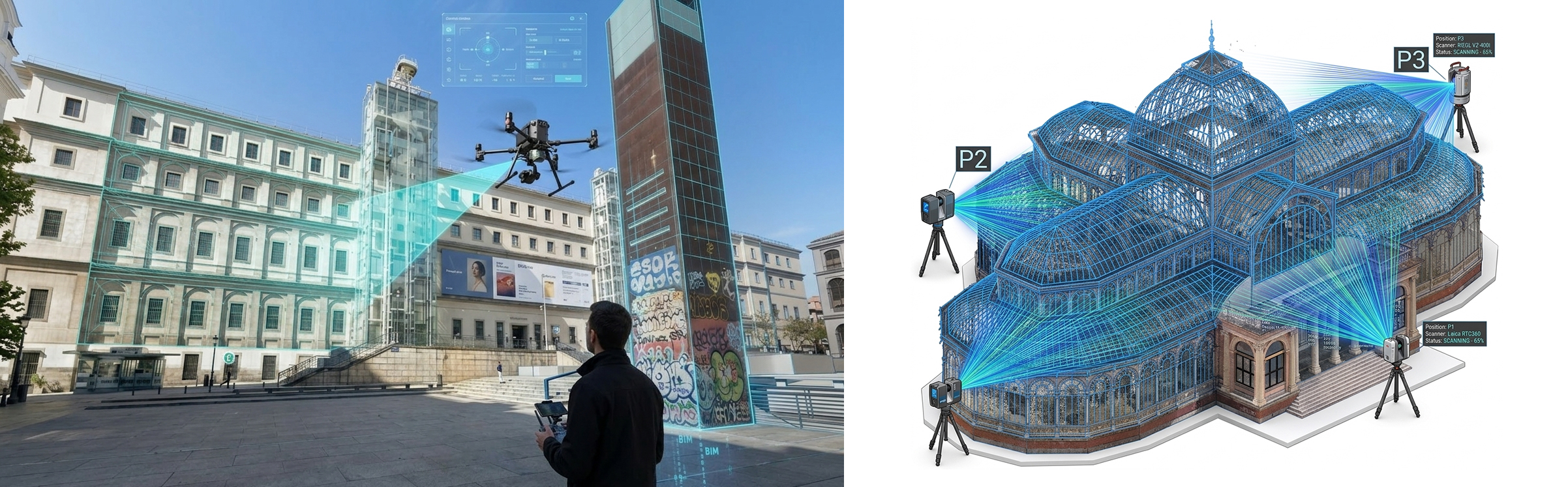
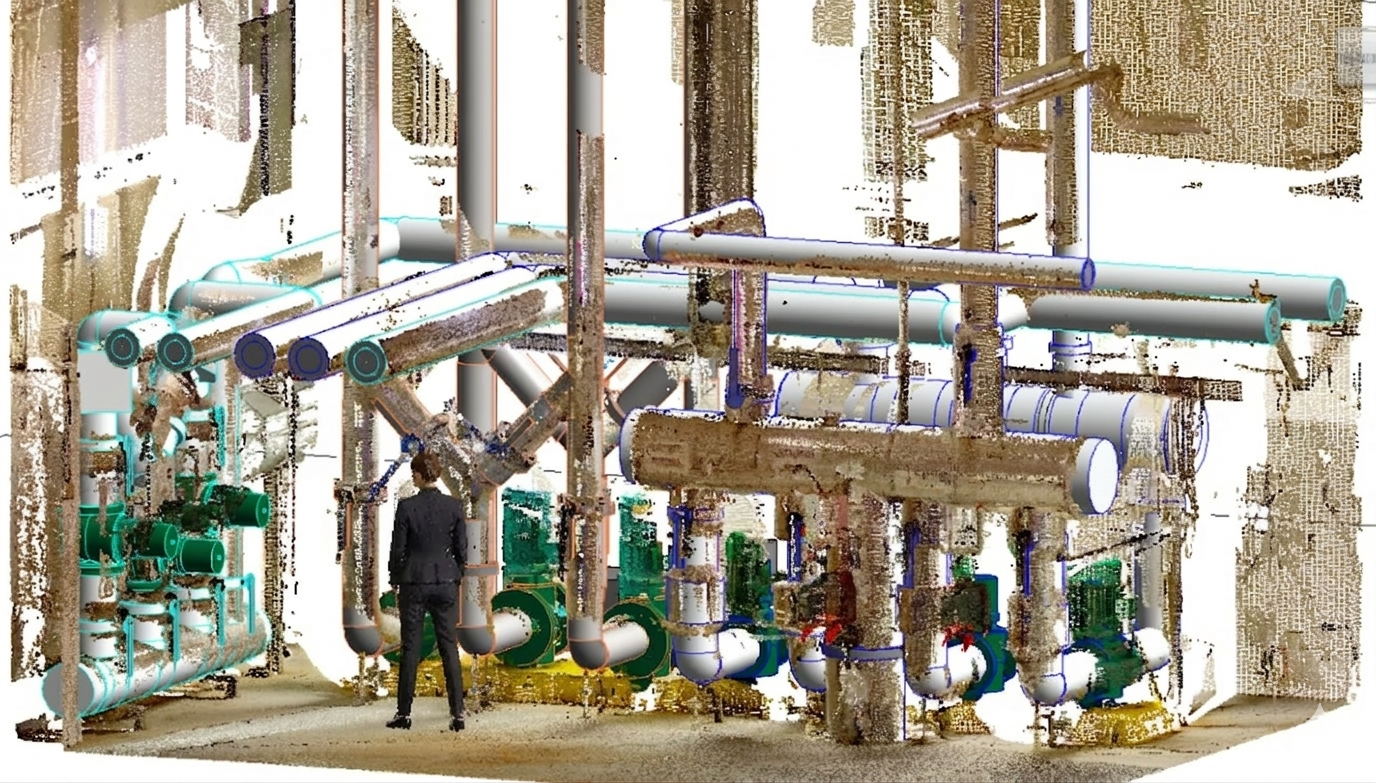
A comprehensive digital survey of the museum buildings was carried out using advanced LiDAR technologies and photogrammetry, ensuring a precise representation of the architectural geometry.
Key activities included:
- Terrestrial 3D laser scanning with millimetric precision
- Drone-based scanning for roofs and inaccessible areas
- Topographic control points using total station
- Capture of 360º imagery for virtual tours
- Processing, registration and georeferencing of point clouds
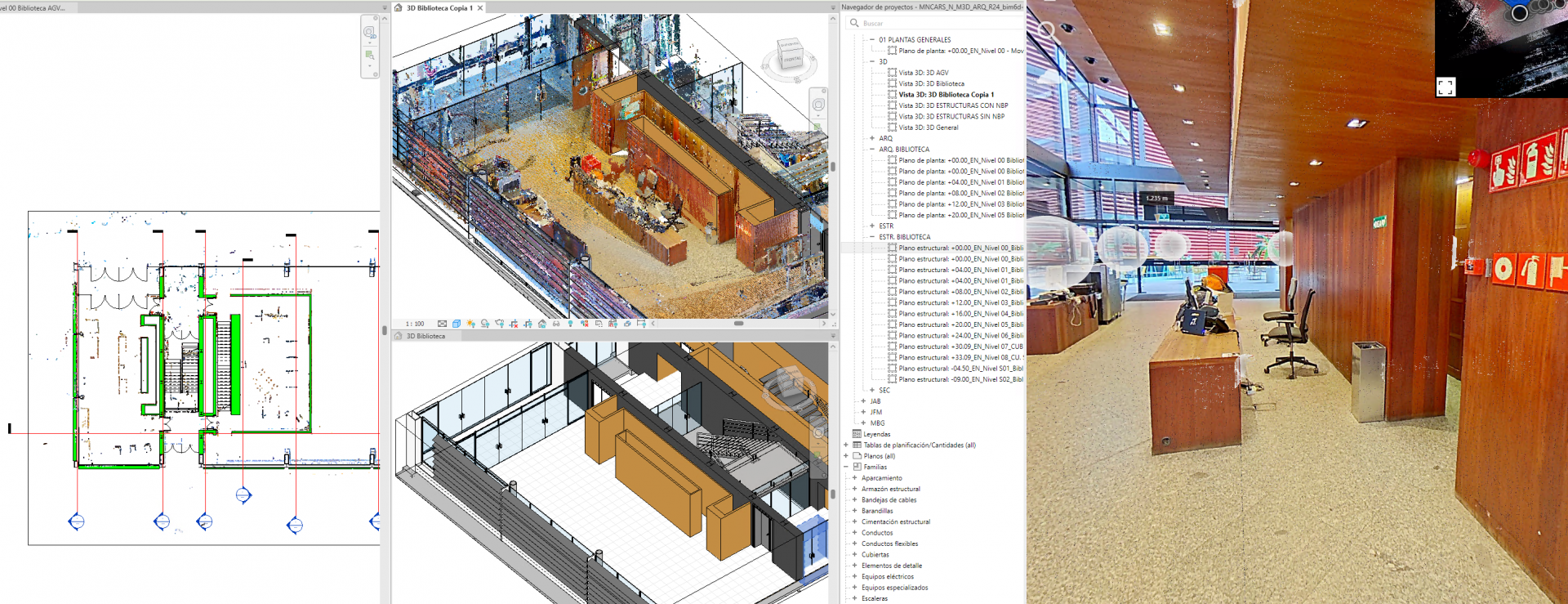
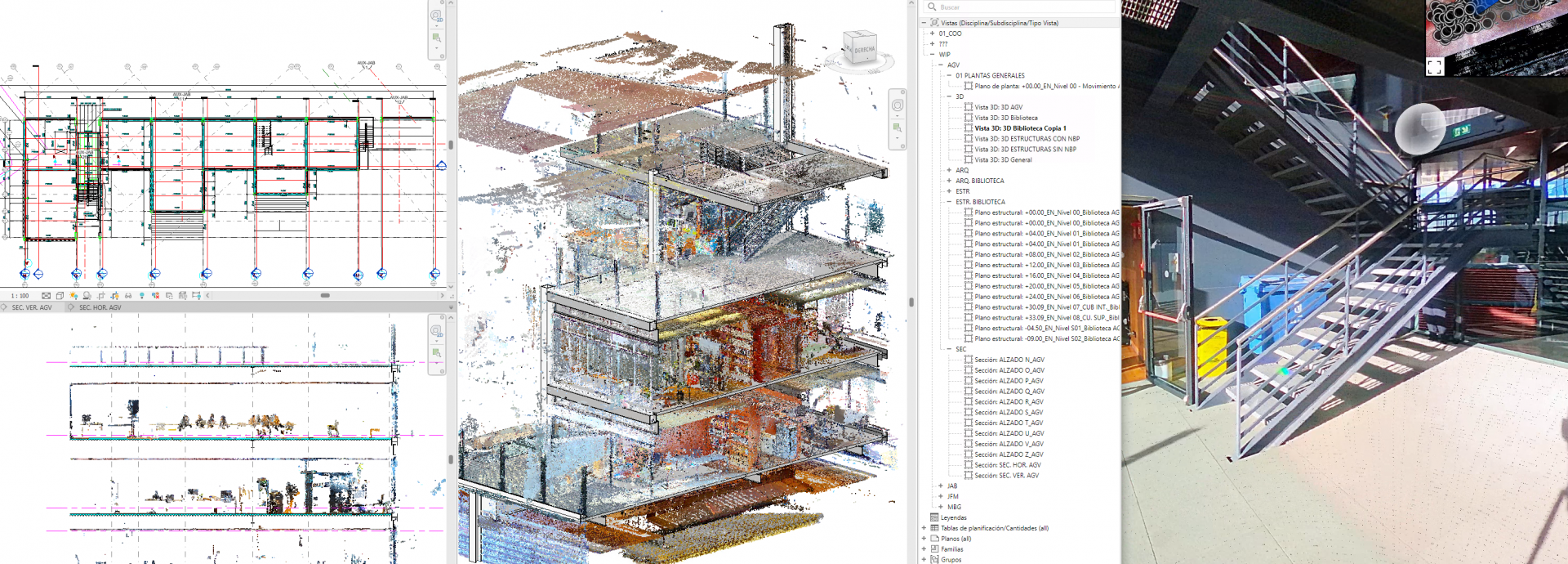
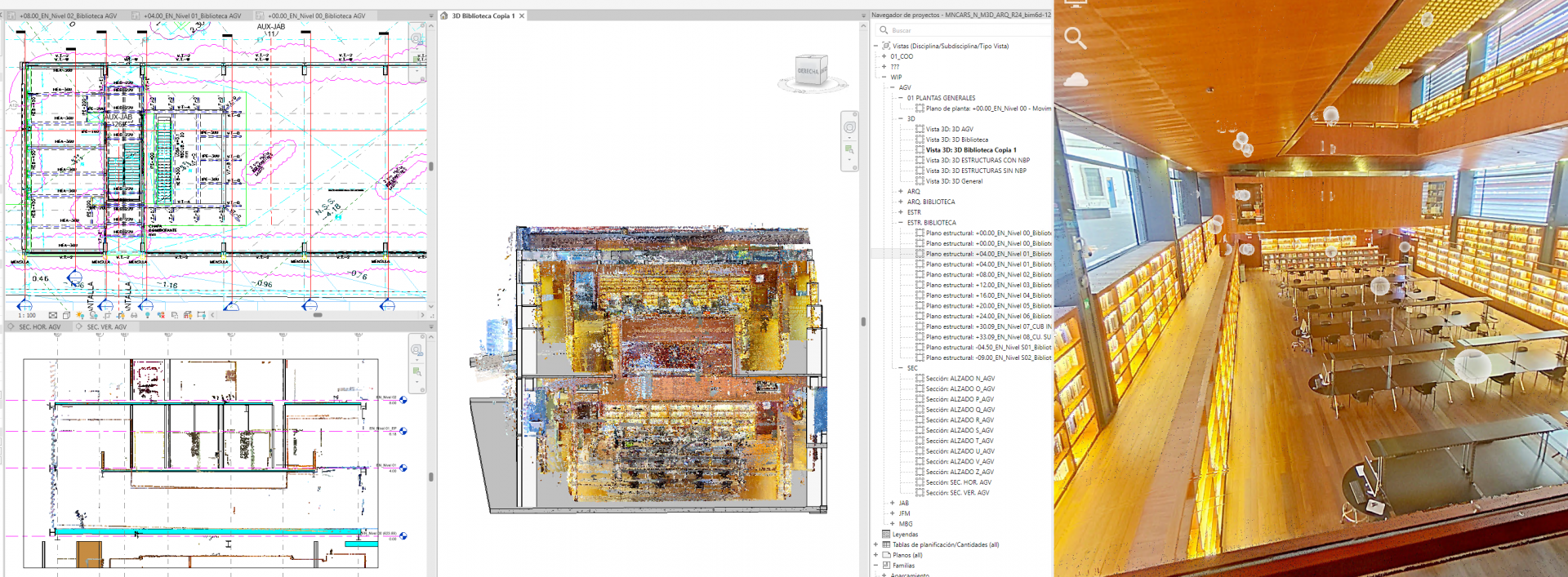
The resulting datasets were delivered in RCP and E57 formats, providing a complete and accurate digital base for the BIM modeling phase.
2. BIM Modeling
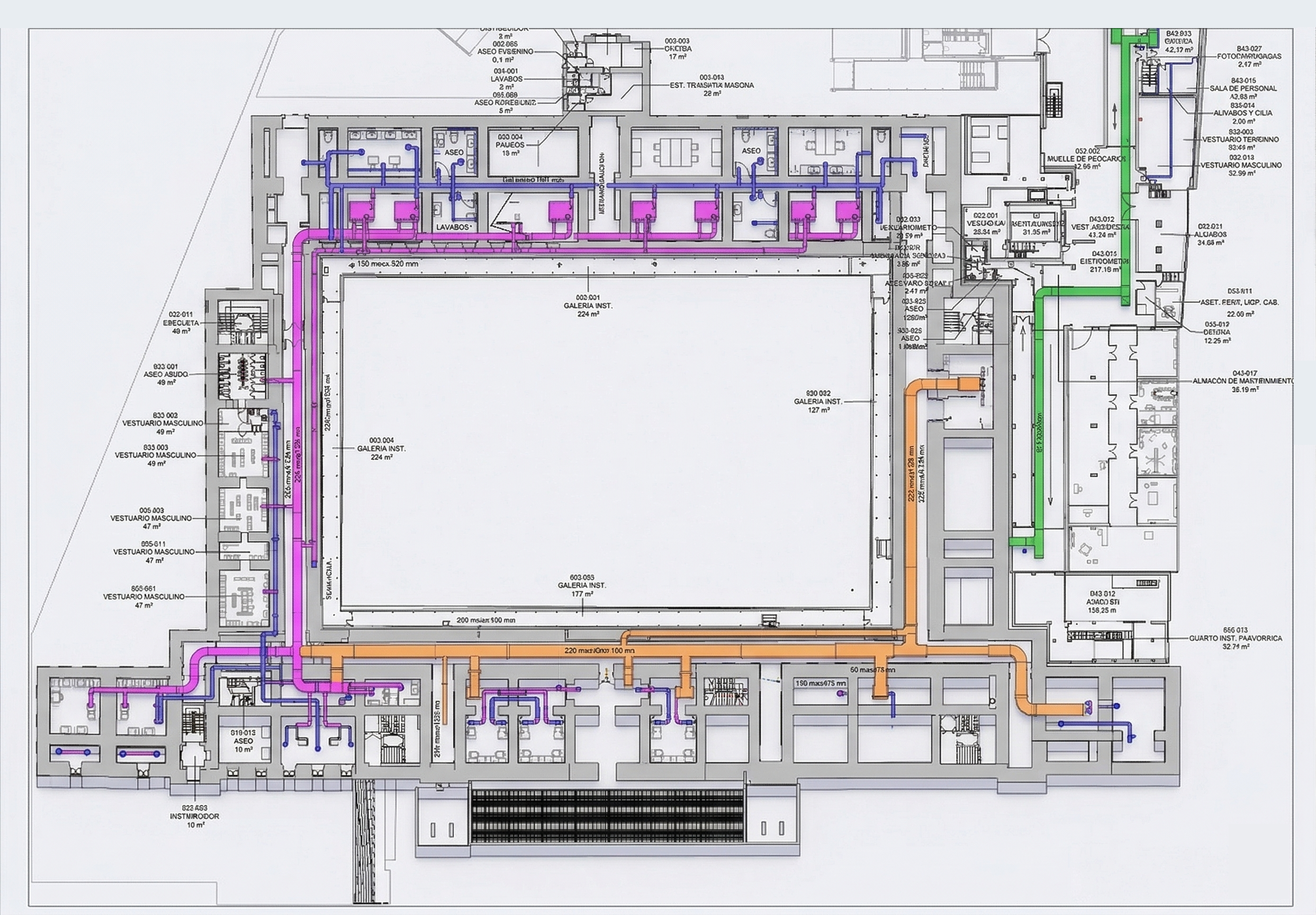
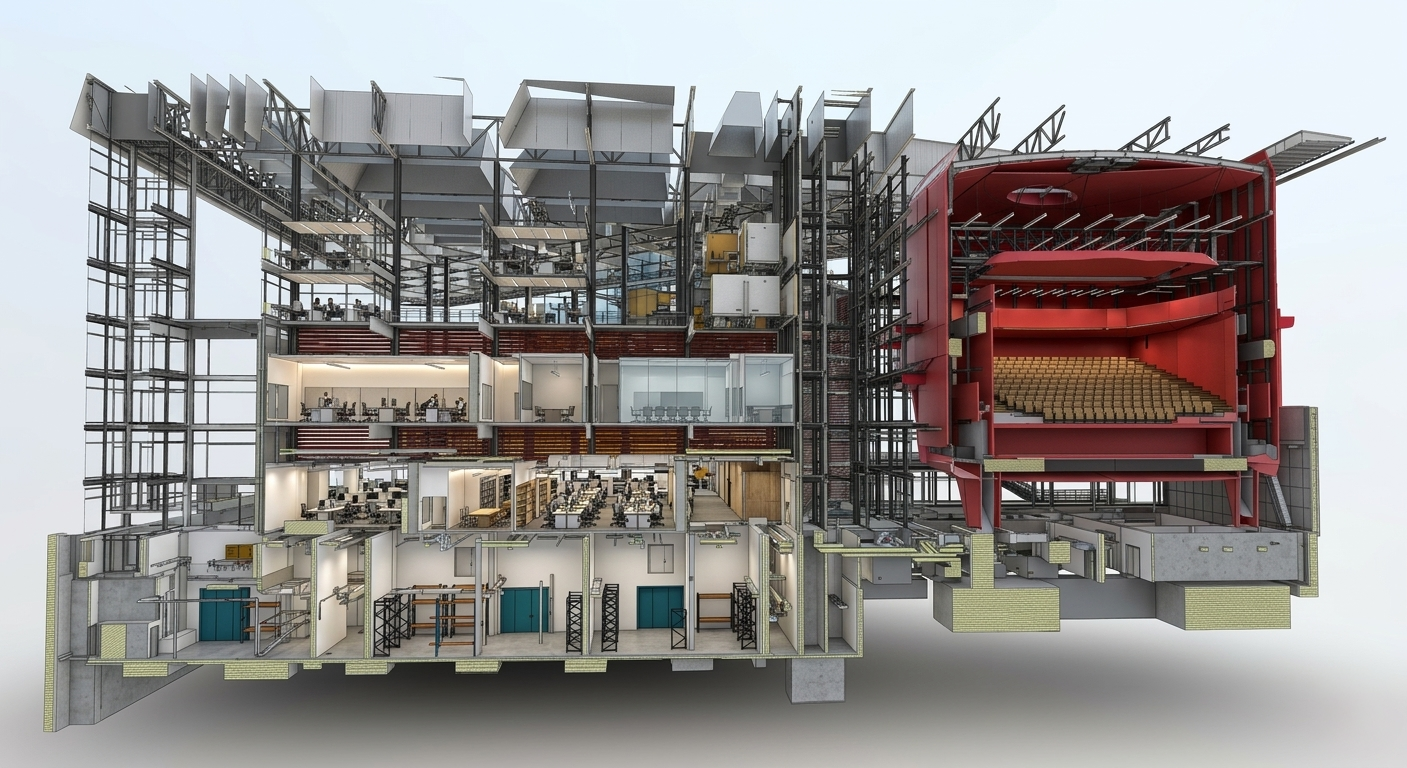
Based on the point cloud data, BIM6D developed detailed Building Information Models (BIM) of the museum facilities.
Main characteristics:
Modeling performed in Autodesk Revit
LOD 300 geometric development
Modeling of:
- Architecture
- Structure
- Visible MEP systems
- Spatial information (rooms and functional spaces)
- Parameterization of assets with structured information
- Unique identifiers for building elements
The models were organized by discipline and building, and coordinated through a federated coordination model, enabling clash detection and quality control.
3. Digital Deliverables and Data Environment
The project also included the implementation of a Common Data Environment (CDE) using Autodesk Construction Cloud, enabling collaborative management of all project information.
Main deliverables included:
- Federated BIM models
- Structured datasets of building elements
- Automatically generated 2D drawings
- Organized document management system aligned with ISO 19650 workflows
- Training sessions for museum technical staff on BIM model use and information management
These deliverables ensure that the digital models can be used not only for documentation purposes, but also as a foundation for facility management and digital twin development.