

SMART CITY PAMPLONA: URBAN DIGITAL TWIN FOR THE CITY OF THE FUTURE
Year: 2025-2026 | Client / promoter: Pamplona / Iruña City Council and the Government of Navarra.
Firms: BIM6D
PROJECT OVERVIEW
PROJECT INTRODUCTION
Pamplona faces the challenge of moving towards a more sustainable and inclusive urban model, one that is prepared for the climate and social challenges of the twenty-first century.
Planning the city of the future requires new tools capable of bringing together territory, mobility, public space, nature, and quality of life. It is no longer simply about representing the city, but about understanding how urban decisions influence proximity, accessibility, comfort, and the resilience of neighbourhoods.
In this context, BIM6D has developed an urban digital twin pilot that makes it possible to visualise and compare planning alternatives, integrating spatial information and key indicators to support more anticipatory and evidence-based decision-making.
TOWARDS AN OPERATIONAL URBAN DIGITAL TWIN
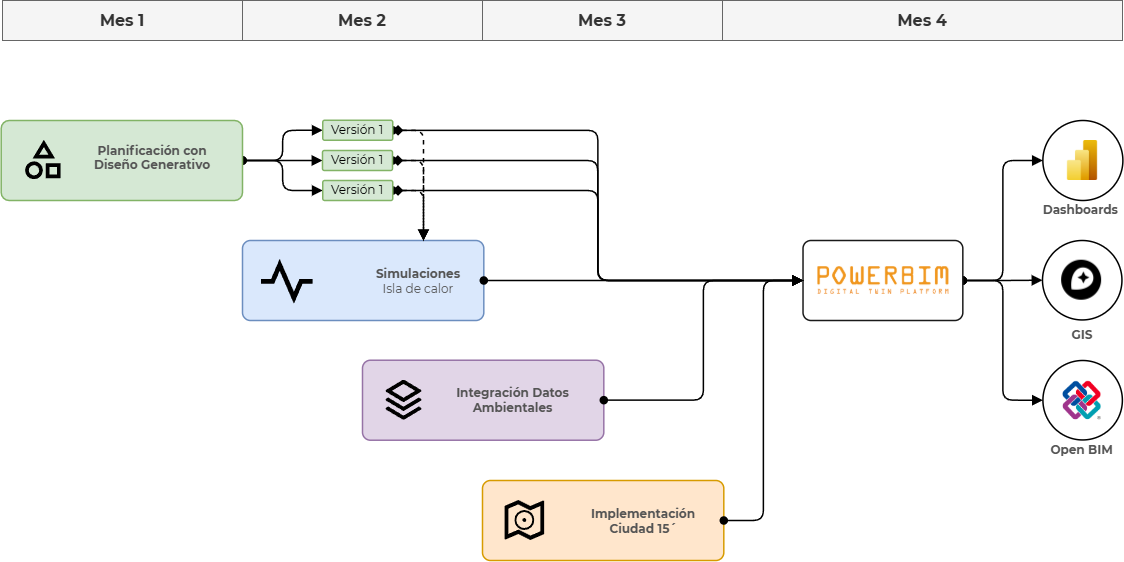
The urban digital twin developed for Pamplona enables a transition from descriptive planning to an operational and data-driven environment, structured around a set of integrated use cases.
The solution connects generative urban planning, environmental simulations, real data integration, and 15-minute city strategies within a unified digital ecosystem powered by the POWERBIM platform.
WHAT HAS BEEN DEVELOPED

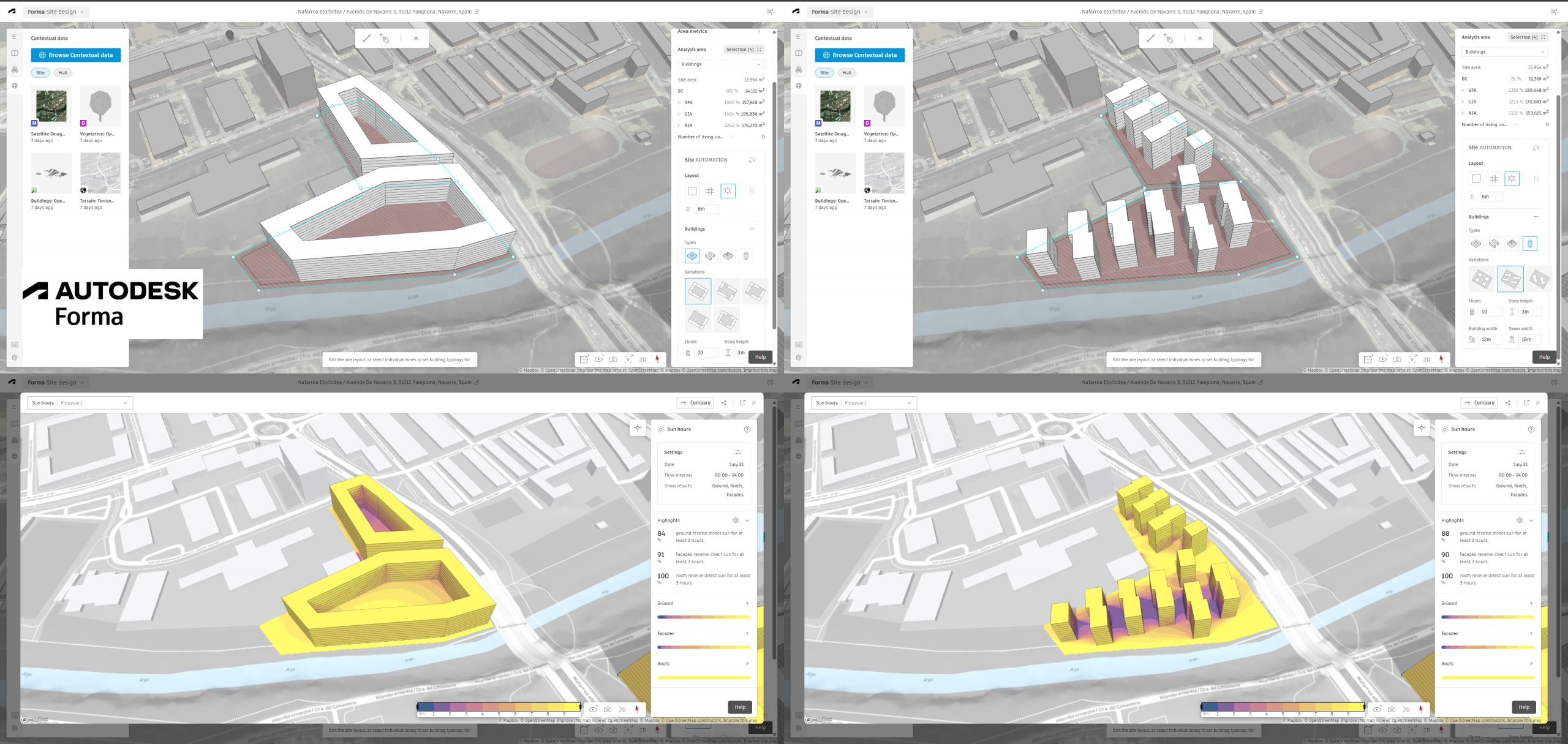
GENERATIVE URBAN DESIGN WITH AUTODESK FORMA
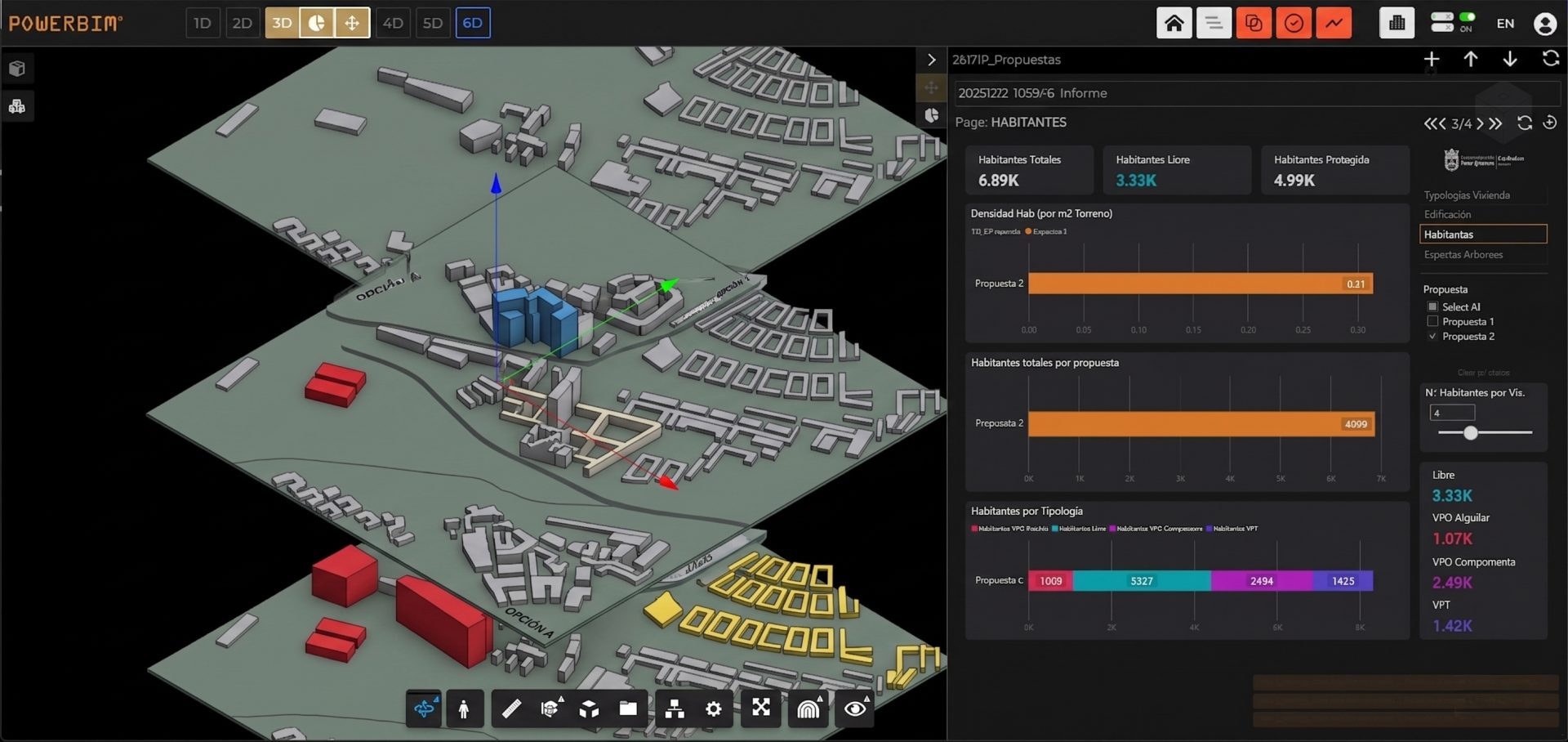
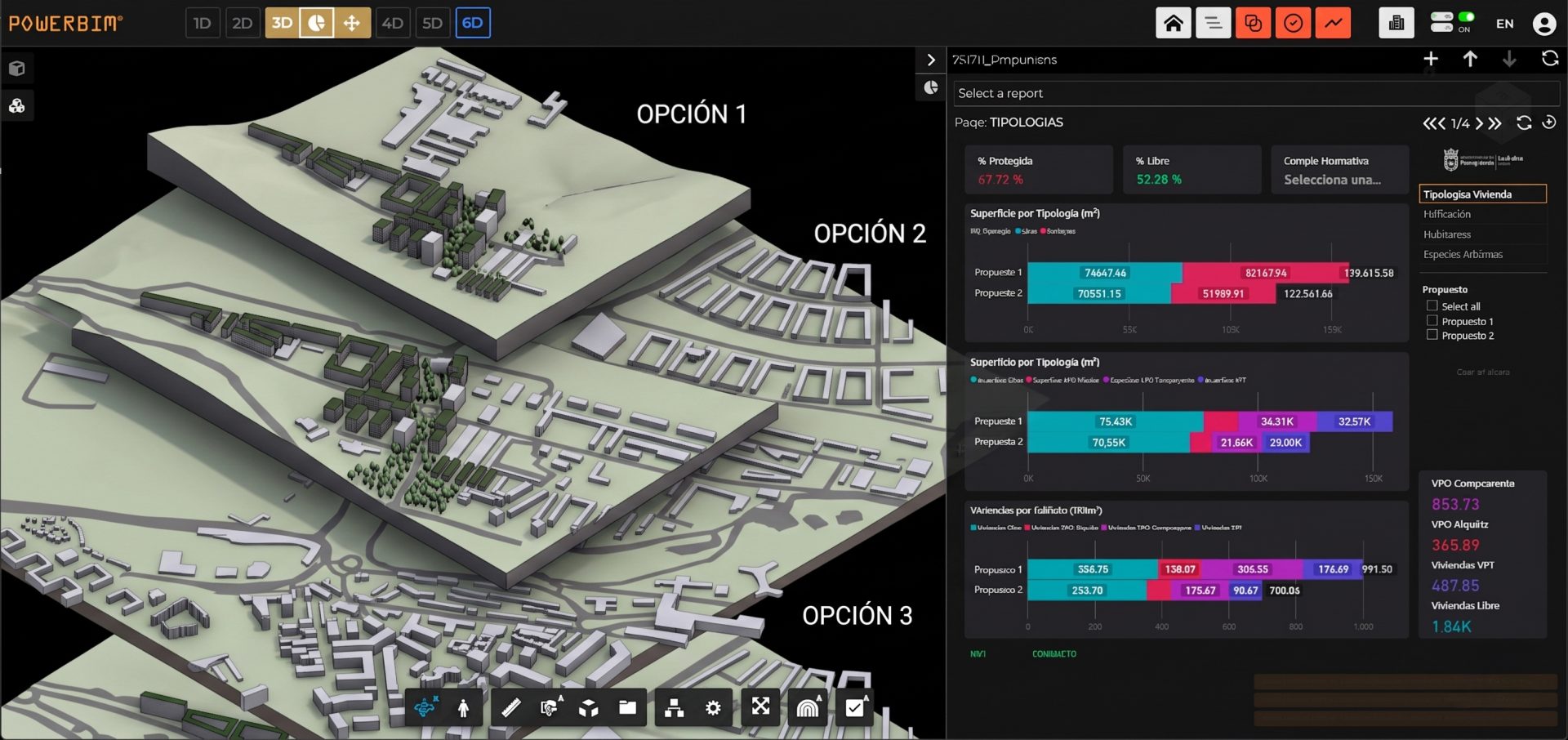
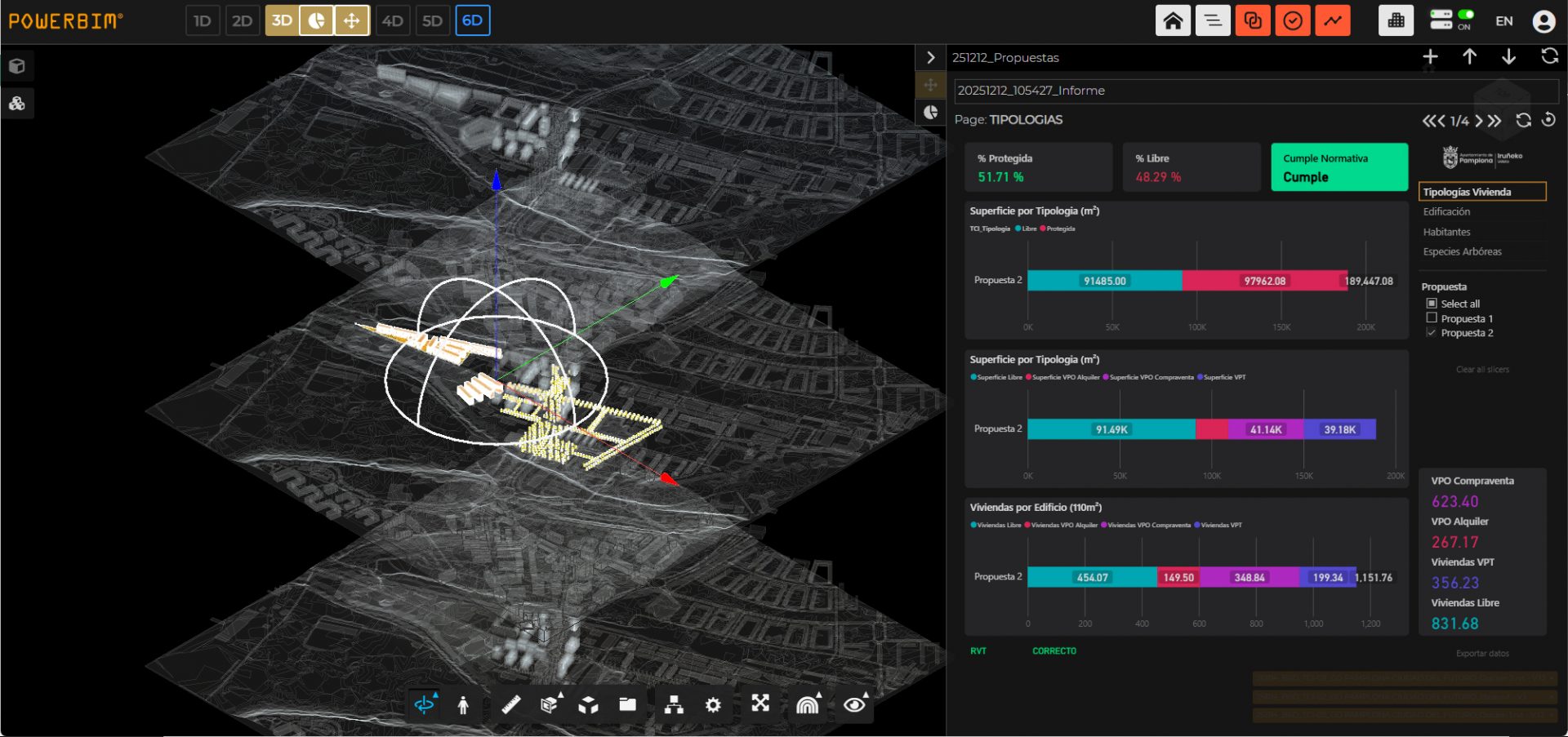
POWERBIM DIGITALTWIN FOR URBAN OPTIONS COMPARISON
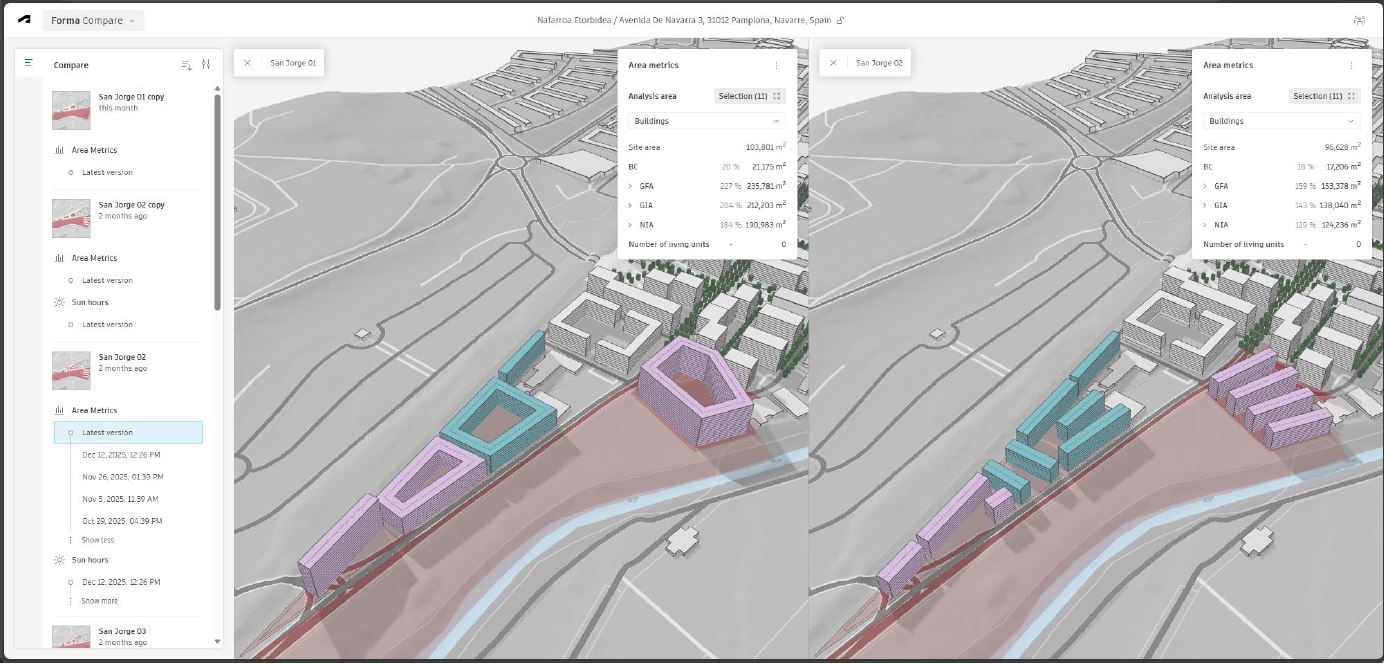
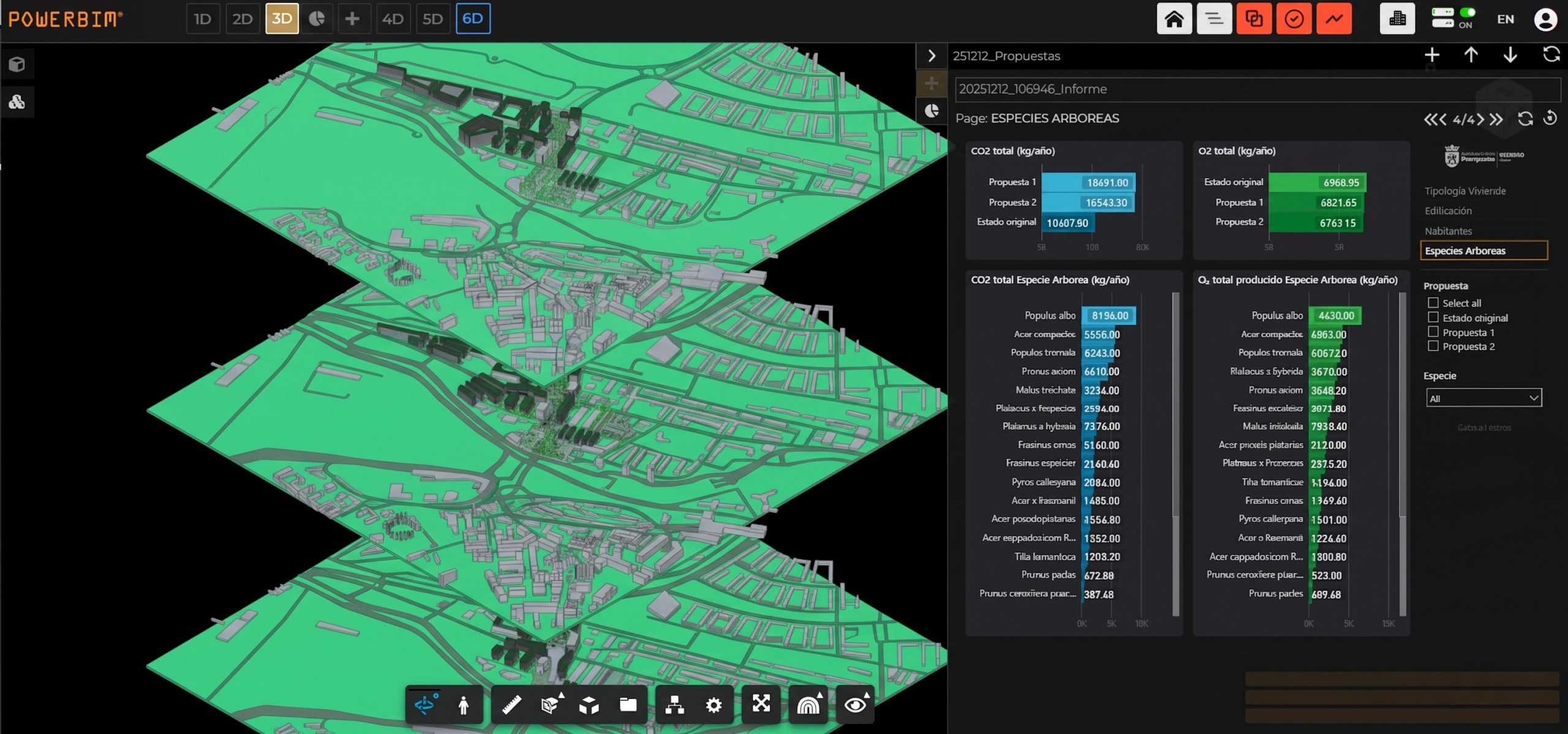
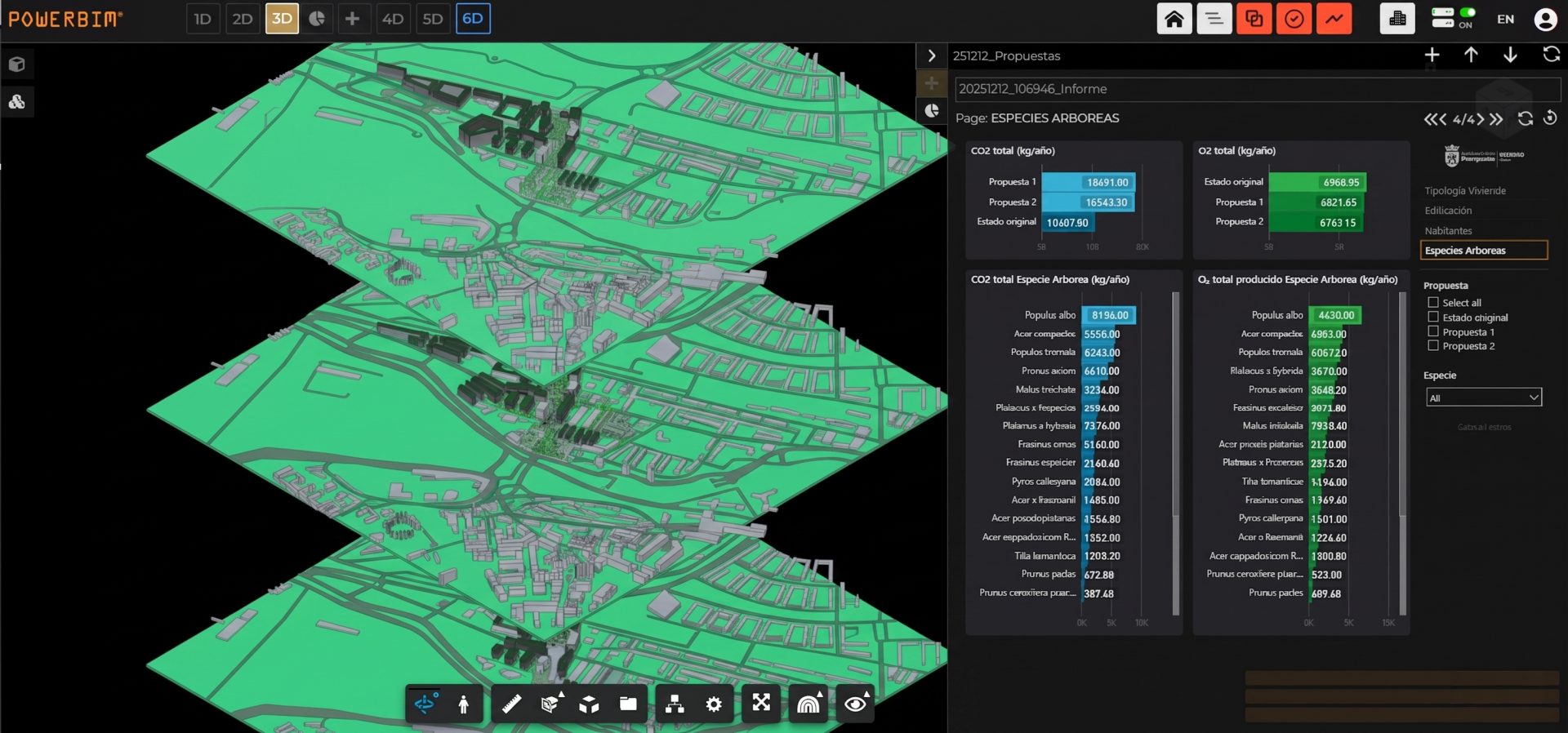
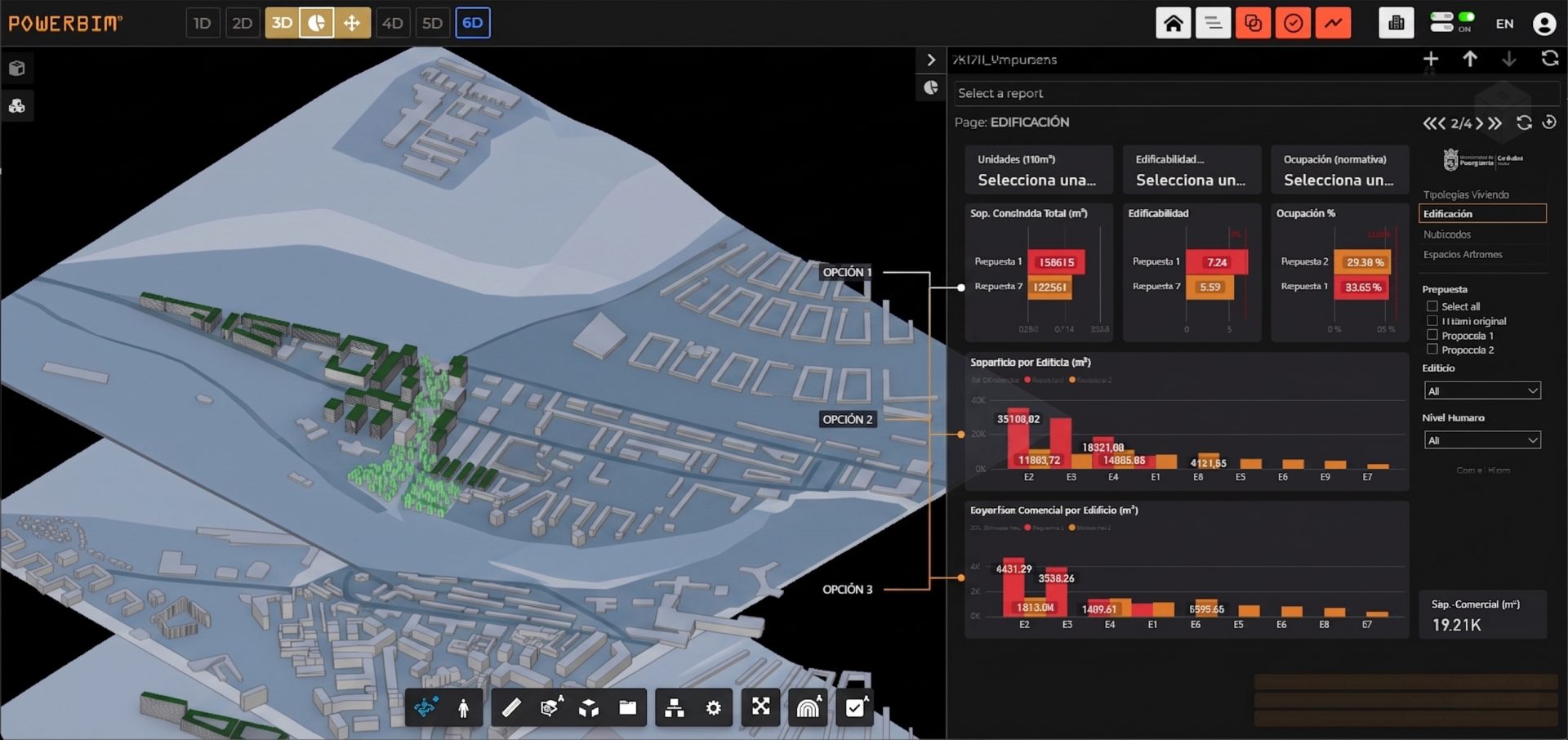
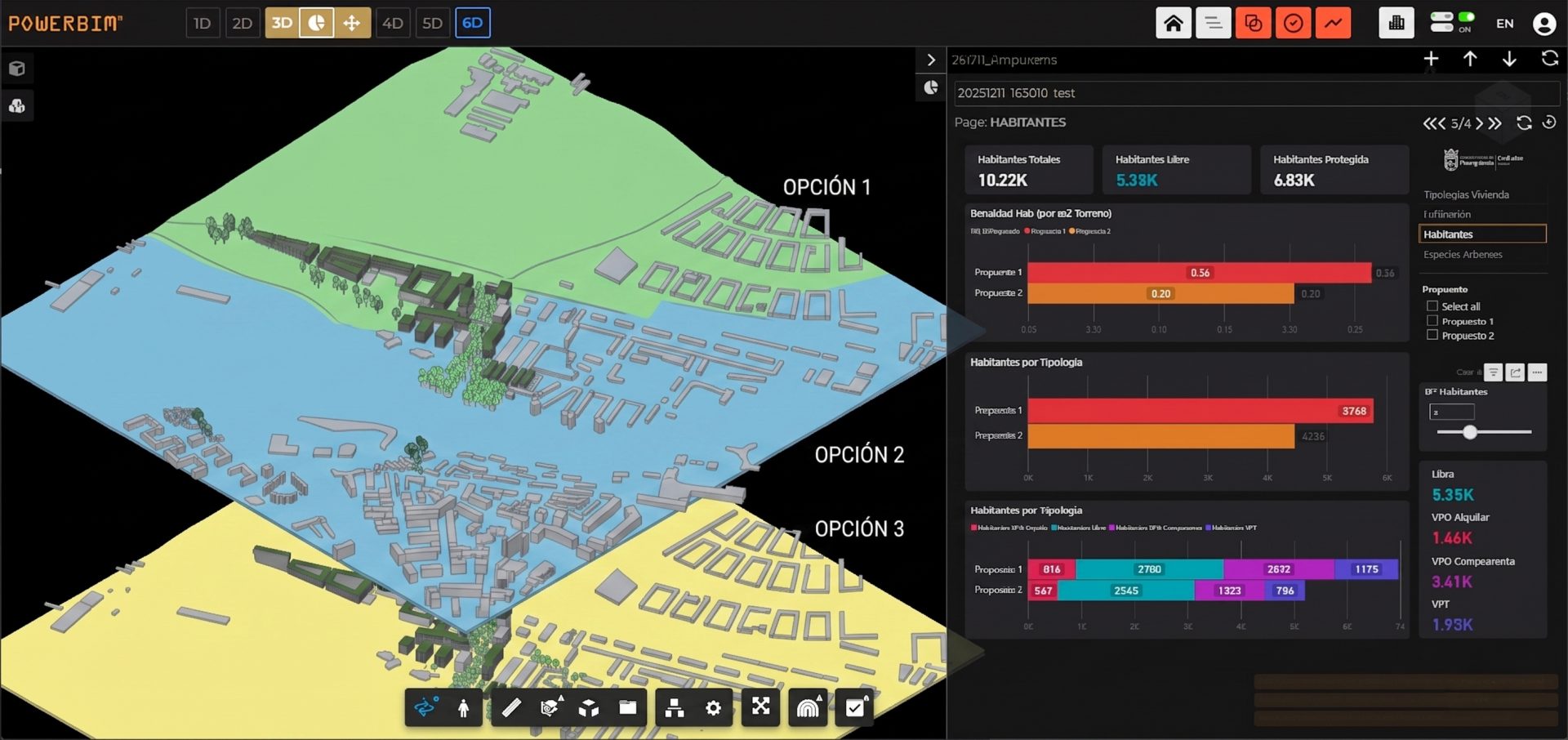
POWERBIM enables a fully operational urban digital twin environment where multiple urban design options, generated in minutes through Autodesk Forma and exported as BIM models, can be instantly compared using data-driven analytics. Once different design scenarios are loaded into the platform, a single analytical dashboard automatically extracts and processes key urban data and KPIs, previously defined in collaboration with the Pamplona City Council.
These include indicators such as number and typology of dwellings (social housing, regulated, private), estimated population based on housing characteristics, building density, façade surface, total built area, public space distribution, and even carbon footprint estimations linked to green infrastructure strategies (e.g., tree species in public spaces).
By connecting BIM models with advanced analytics, POWERBIM transforms urban design alternatives into measurable, comparable scenarios, enabling objective and transparent decision-making. This approach significantly accelerates processes that have traditionally been slow, manual, and costly, allowing public administrations to evaluate multiple options in a short time and select the most balanced solution in terms of social, environmental, and urban performance.
Main Objectives:
- Compare multiple urban design scenarios through a unified digital twin environment
- Automatically extract and analyze key urban KPIs from BIM models
- Support evidence-based decision-making with real-time dashboards
- Evaluate housing distribution, density, and population impact
- Integrate sustainability metrics, including carbon footprint and green infrastructure
- Reduce time and costs in urban planning and evaluation processes
- Enable faster, more informed selection of optimal urban development strategies
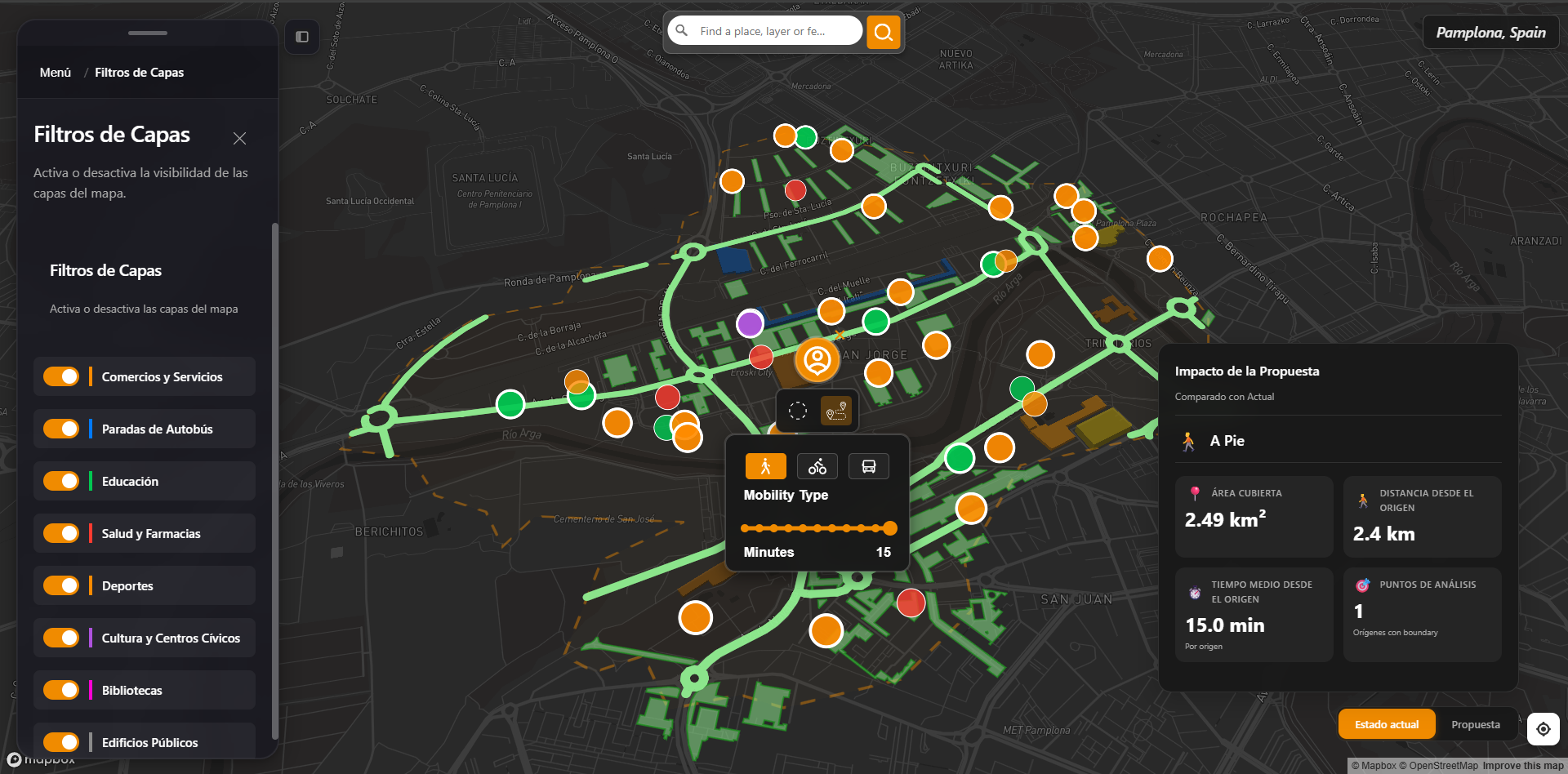
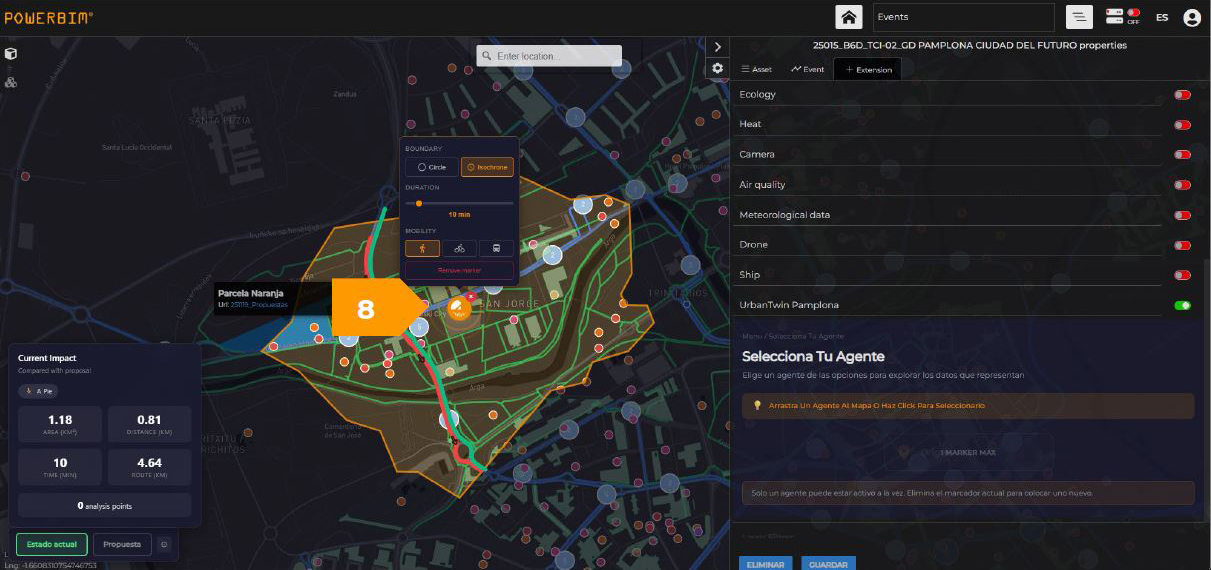
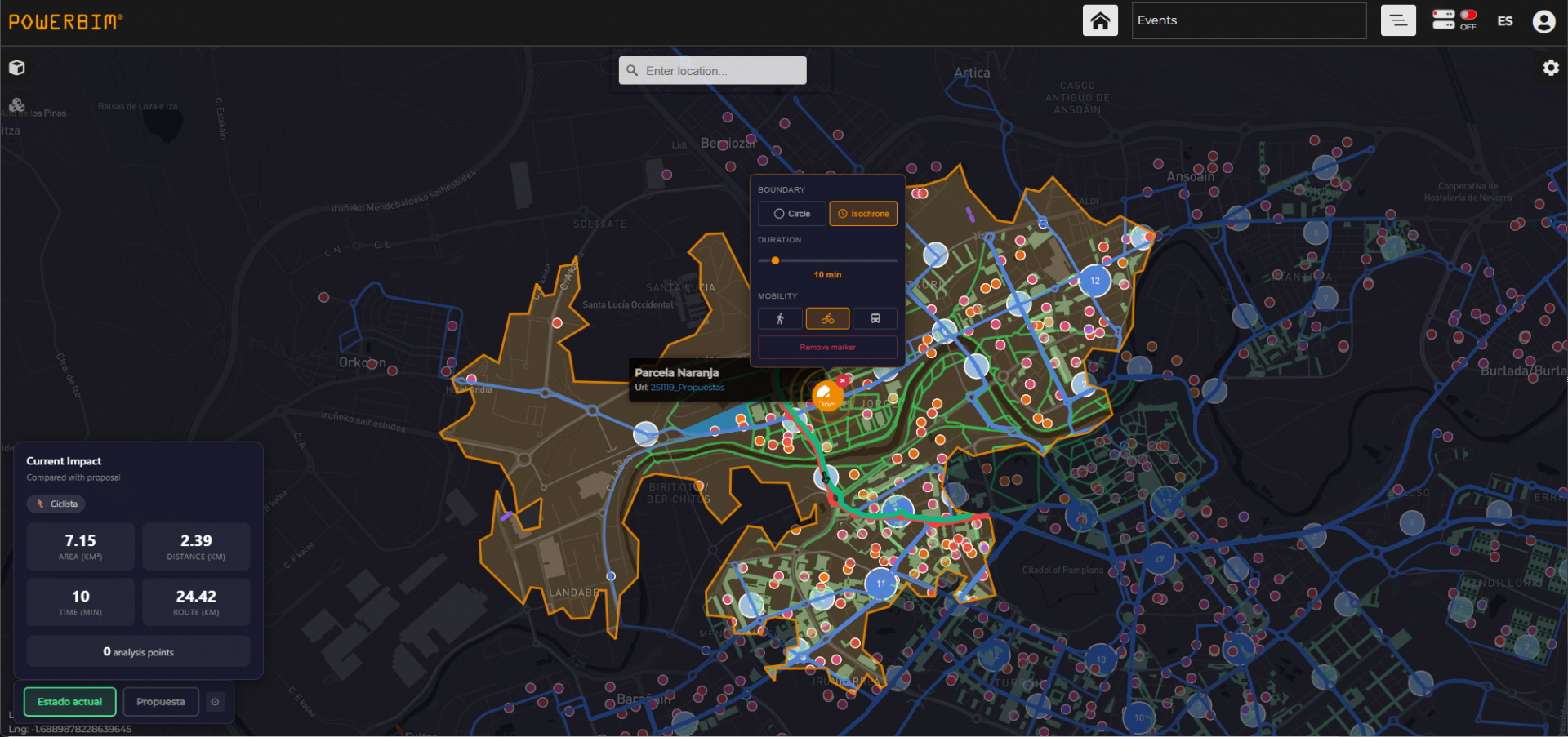
15 MINUTES CITY SIMULATION